
Who We Are & What We Believe
Learn about our parish community and the Orthodox Christian faith that shapes our life together.
A Mission Community in Washington, DC
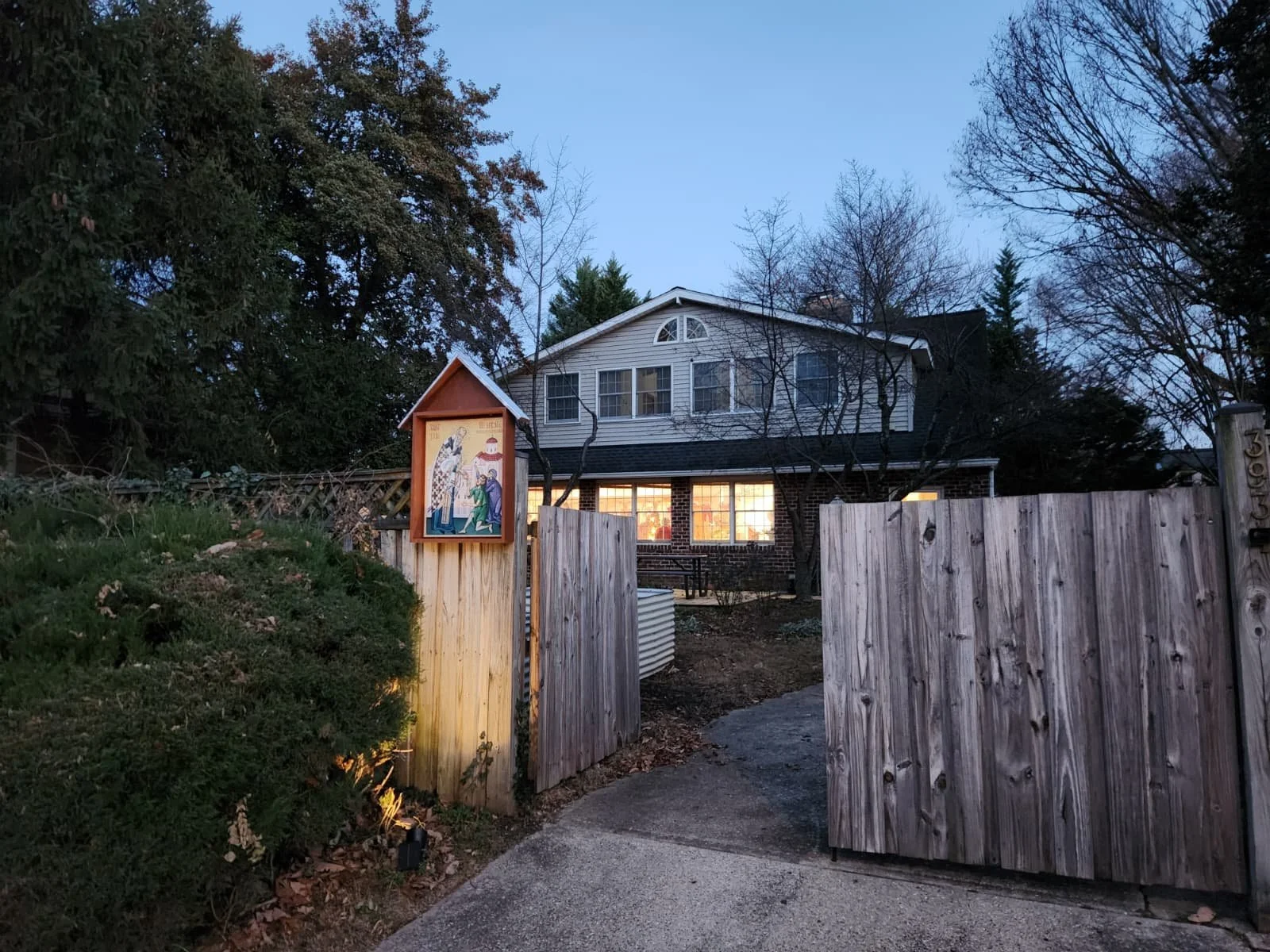
We are a growing Orthodox Christian mission located in a quiet neighborhood in Southeast Washington, DC. Our parish is committed to supporting programs that provide meals and nourishment to families and children in the community around us. We are also here to help people live meaningful lives in Christ.
From 2016 to 2021, our services were held in the rectory chapel of Assumption Roman Catholic Parish, graciously offered to us by Father Gregory Shaffer. We remain deeply grateful for that season of hospitality and support.
In August 2021, we moved to a new location when a generous benefactor granted us the use of a building to serve as our church home. It has been a blessing to witness the continued growth of our parish community in this new space. As we grow, we are able to offer more to the surrounding neighborhood through our charitable and outreach programs.
We Warmly Welcome
Those seeking a smaller, more intimate Orthodox church home
Orthodox Christians returning to regular worship
Those exploring or inquiring about Orthodoxy
Families and individuals

Active duty and retired military
Visitors and travelers to Washington, DC
As we continue to grow, we hope to expand the ways we serve our community. There are many needs around us, and several important outreach initiatives are currently in development.
Many people today feel spiritually disconnected or unsettled. We seek to offer a stable and nurturing spiritual home rooted in the life of the Church. For those longing for a deeper and more sacred connection with Christ, the Divine Liturgy remains the heart of that encounter.
Worshiping together in person as a community is powerful and life-giving. The fullness of Christian life is experienced most deeply when we gather face to face in prayer.
The Nicene Creed
The Orthodox Statement of Faith
Each Sunday during the Divine Liturgy, we proclaim the Nicene Creed — an ancient confession of faith written in 325 AD and 381 AD to clarify and safeguard the Church’s teaching about the Father, the Son, and the Holy Spirit.
The word creed comes from the Latin credo, meaning “I believe.” In the Orthodox Church, we often call it The Symbol of Faith because it gathers together and expresses what we believe as Christians.
-
I believe in One God, (Deuteronomy 6:4; Mark 12:29, 12:32; Ephesians 4:6; 1 Corinthians 8:6)
The Father Almighty (Genesis 17:1-8; Exodus 6:3; Matthew 6:9; Ephesians 4:6; 2 Corinthians 6:18)
Maker of heaven and earth (Genesis 1:1; Job 38:1-30)
And of all things visible and invisible (Colossians 1:15-16; John 1:3; Hebrews 11:3; Revelation 4:11)
And in one Lord, Jesus Christ (John 20:28; Acts 11:17, 16:31; 1 Corinthians 8:6; Ephesians 4:5)
The Son of God, the Only-Begotten (Matthew 3:17, 14:33, 16:16; John 1:14, 3:16)
Begotten of the Father before all ages (Psalm 2:7; John 1:1-2)
Light of Light (John 1:4, 1:9, 8:12; Psalm 27:1; Matthew 17:2, 5; 2 Corinthians 4:6; Hebrews 1:3; 1 John 1:5)
True God of True God (John 1:1-2, 17:1-5; 1 John 5:20)
Begotten, not made (John 1:1-2, 16:28, 1:18)
Of one essence with the Father (John 10:30)
By Whom all things were made (Hebrews 1:1-2, 10; John 1:3, 1:10; Colossians 1:16; 1 Corinthians 8:6; Romans 11:36)
Who for us men and for our salvation (I Timothy 2:4-5; Matthew 1:21; 1 Thessalonians 5:9; Colossians 1:13-14)
Came down from heaven (John 3:13, 3:31, 6:33-35, 38)
And was incarnate of the Holy Spirit and the Virgin Mary (Luke 1:34-35)
And became man (John 1:14; Hebrews 2:14)
And He was crucified for us (Mark 15:25; I Corinthians 15:3; 1 Peter 2:24)
under Pontius Pilate (Mark 15:15)
And suffered (Mark 8: 31; Matthew 27:50)
And was buried (Luke 23:53; 1 Corinthians 15:4; Matthew 27:59-60)
And He rose again on the third day (Mark 9:31, 16:9; Acts 10:40; 1 Corinthians 15:4)
According to the Scriptures (Luke 24:1, 45-46; 1 Corinthians 15:3-4)
And ascended into heaven (Luke 24:51; Acts 1:9-10; Mark 16:19)
And sits at the right hand of the Father (Mark 16:19; Acts 7:55; Luke 22:69)
And He will come again with glory (Matthew 24:27; Mark 13:26; John 14:3; 1 Thessalonians 4:17)
To judge the living and the dead (Acts 10:42; 2 Timothy 4:1; Matthew 16:27; 2 Corinthians 5:10; 1 Peter 4:5)
His kingdom shall have no end (2 Peter 1:11; Hebrews 1:8)
And I believe in the Holy Spirit (John 14:26; Acts 1:8)
The Lord and Giver of life (Acts 5: 3-4; Genesis 1:2; John 6:63; 2 Corinthians 3:6)
Who proceeds from the Father (John 15:26)
Who together with the Father and the Son is worshipped and glorified (Matthew 3:16-17)
Who spoke through the prophets (I Samuel 19:20; Ezekiel 11:5; 1 Peter 1:10-11; Ephesians 3:5)
And I believe in one, holy, catholic and apostolic Church (Matthew 16:18, 28:19; 1 Peter 2:5,9; Ephesians 1:4, 2:19-22, 4:4, 5:27; Acts 1:8, 2:42; Mark 16:15; Romans 12:4-5; 1 Corinthians 10:17)
I acknowledge one baptism for the remission of sins (Ephesians 4:5; Galatians 3:27; 1 Corinthians 12:13; Colossians 2:12-13; Acts 22:16)
I look for the resurrection of the dead (John 11:24; 1 Corinthians 15:12-49; Romans 6:4-5; 1 Thessalonians 4:16)
And the life of the world to come. (Mark 10:29-30; 2 Peter 3:13; Revelation 21:1)
Amen. (Psalm 106:48)
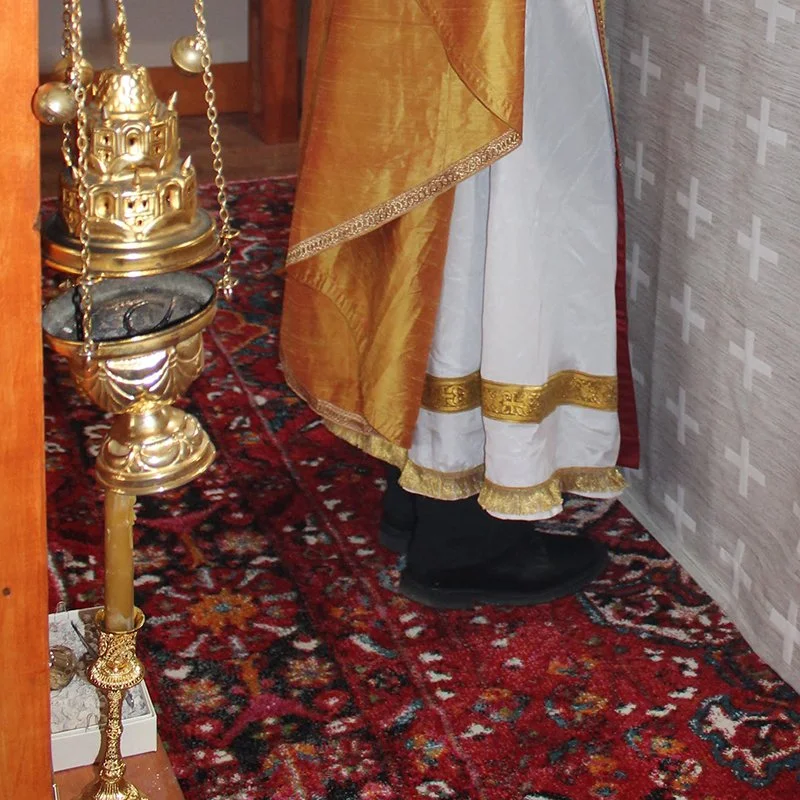
About Father John
Father John Anderson is the parish priest of St. John the Merciful Mission. His journey to Orthodoxy began at a young age when he witnessed a group of monks walking past him. It’s a memory he’s never forgotten, though he was only six years old at the time. He saw they were men of God and that’s what he wanted to be.
As a young adult, he found a book on the Desert Fathers and mothers and studied their teachings from the third to the twentieth centuries. Raised Episcopalian/Anglican, he attended church regularly, but was looking for more meaning as he got older. The words and instruction of the desert fathers created a path that brought him to where he is today.
After joining the military, Father John met his wife Sabine while stationed in Germany. At the time of their first date, he felt called to be a priest.
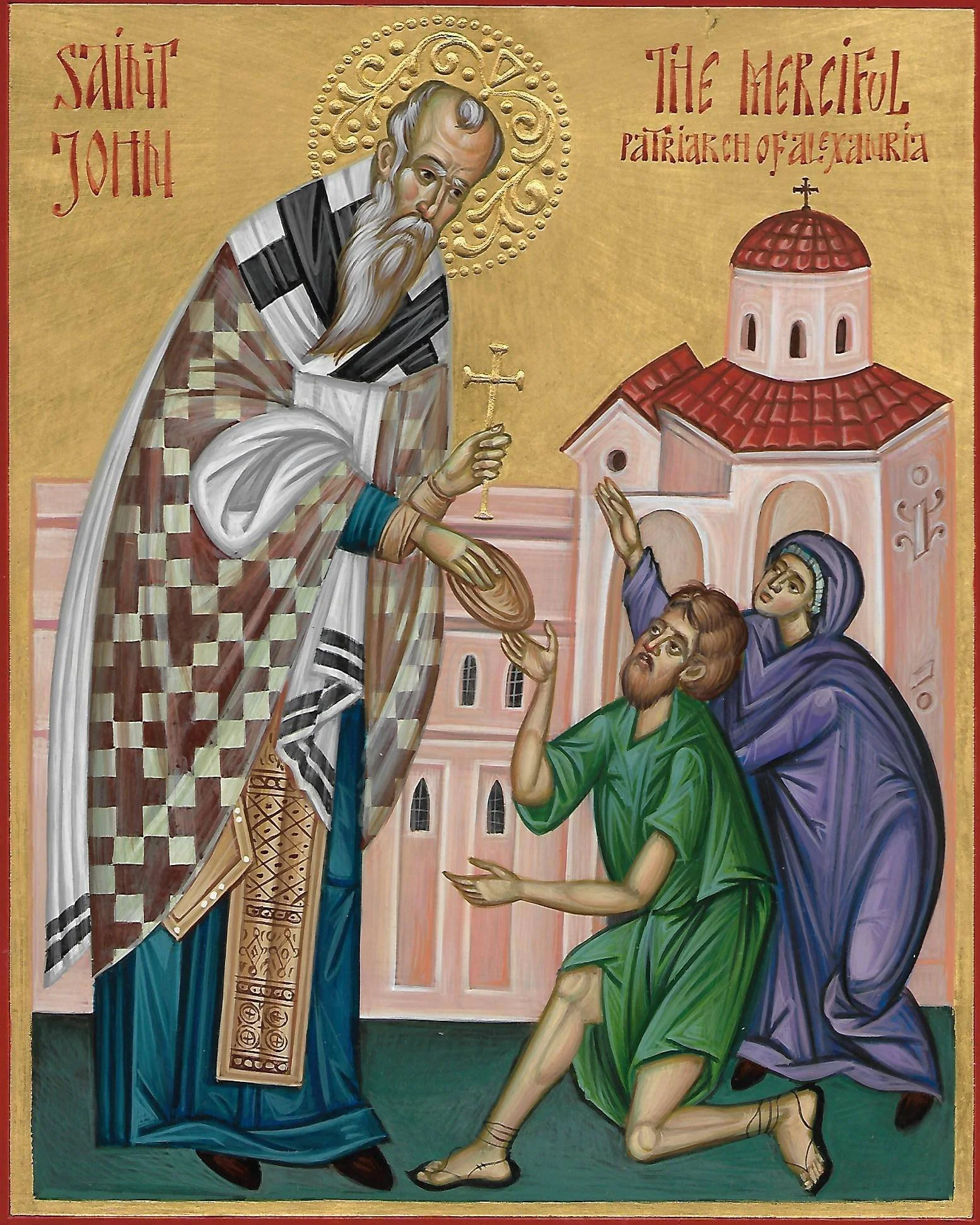
Father John attended seminary at St. Vladimir’s Orthodox Theological Seminary (when Father John Meyendorff was dean). After his ordination to the priesthood, Father John and Sabine moved a lot as a part of Father’s career as a military officer, medic, and chaplain. He’s lived in four countries, and throughout the United States.
His favorite thing about being a priest is the ability to bring people into better and healthier relationships with each other and God. What he enjoys about St. John the Merciful is that the outreach is as much a part of daily life as the liturgical celebration.
Father John and Sabine have three adult children and enjoy living in the DC/Northern Virginia area. They love meeting new people and being active and involved in the life of the mission as it grows.