
Wildly Inefficient
By Rachel
There is a 21st century philosophical movement called effective altruism.
“Effective altruism is a project that aims to find the best ways to help others, and put them into practice. This project matters because, while many attempts to do good fail, some are enormously effective. For instance, some charities help 100 or even 1,000 times as many people as others, when given the same amount of resources. This means that by thinking carefully about the best ways to help, we can do far more to tackle the world’s biggest problems. (source: effectivealtruism.org)
I only recently learned about this concept, and as someone who has pursued two degrees in optimization, my initial reaction was: I like it. Elon Musk does too.
It reminds me of when I calculated that my God-endowed talents of making money in our capitalistic machine could support more individuals than if I were to go myself, which would only add to the global missionary count by, well, one. The math was irrefutable.
Given my credentials, I am here to say with some authority that our meal ministry at St. John the Merciful is wildly inefficient.
The Harvest is Plentiful
Father John Anderson has a vision: to invite our neighbors to be co-laborers of creation through gardening—not just to share good food but to teach others how to grow it themselves. Our neighborhood in Anacostia is considered a food desert, in fact, 46% of all food deserts in DC are in Ward 8. So when the mission moved into the house we are in now, the garden beds were among the first things to be set up.
Year after year he—along with anyone willing— would weed, sow, rotate the crops, and lay down good soil. Year after year, the harvest grew.
There was now a question: how do we get the good food we grew to the people who need it?
At first we would go door-to-door, but we found that it wasn’t always welcome. If you dig into the food desert problem, you’ll find there are many barriers to eating good food: limited access to transportation, very few grocery stores, low incomes, to name a few. There is also the barrier of food preparation. You can’t really hand someone experiencing homelessness an organic, locally grown butternut squash and expect it will be of any good to them. Honestly, you can barely hand me one without it becoming a whole ordeal (read my thoughts On Stewarding Tomatoes).
Wildly Inefficient
So, in a small contribution to “close the loop,” I reached out to a local non-profit called DC127, who helped connect us to a family in our neighborhood that could benefit from a few prepared meals made with the produce from our garden. Amazing.
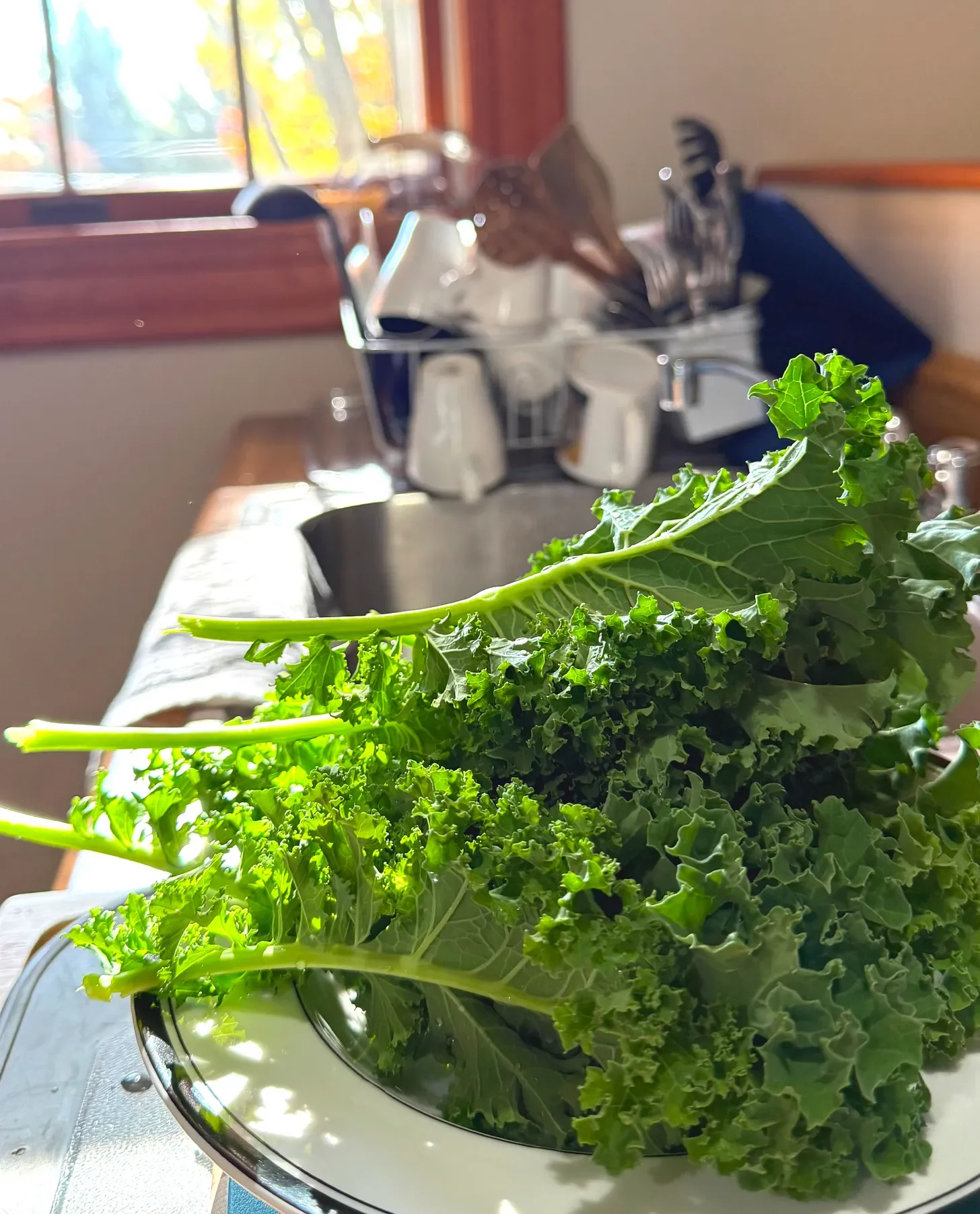
there is always fresh kale
Practically, it looked like this: Remembering late Saturday that it was a meal ministry week. Googling recipes, not just any recipe, but one that could incorporate something from the garden. Kale? Tomatoes? Maybe the green peppers were ready? After liturgy, I’d rush off to the grocery store to spend $20 on missing ingredients, return to the church, start cooking, optimistically tell the family I’d be by around 2:30, text again that it’d probably be closer to 3, clean the kitchen, lock up the church, arrive—still late—to hand off the meal with a smile, and drive home, relieved the task was complete and thinking:
Why not just DoorDash them a $20 meal? The need would be met, and I’d save my time and energy.
Effective altruism vehemently agrees.
But no, I spent the better part of the day throwing six leaves of kale into a soup that didn’t even call for kale.
The Soup
There is a local chain here in DC called Lebanese Taverna (fun fact: they have one inside the Pentagon.) For $8, you can get lentil soup and fresh pita. This has been a staple for me, especially on fasting days. I found a copycat recipe online or my loose interpretation is below:
fresh cilantro, chopped finely
garlic cloves, minced
olive oil
salt (needed more salt)
2 large onions, diced
1 lb green lentils
3 shakes ground cinnamon
1 big spoon ground sumac
4 to 8 cups of vegetable broth (how many cartons did you buy?)
cups water
10 oz bag frozen chopped spinach
> garden kale, to close the loop
2 potatoes, peeled and cubed
3 carrots, peeled and coined
So many lemons worth of lemon juice (4?)
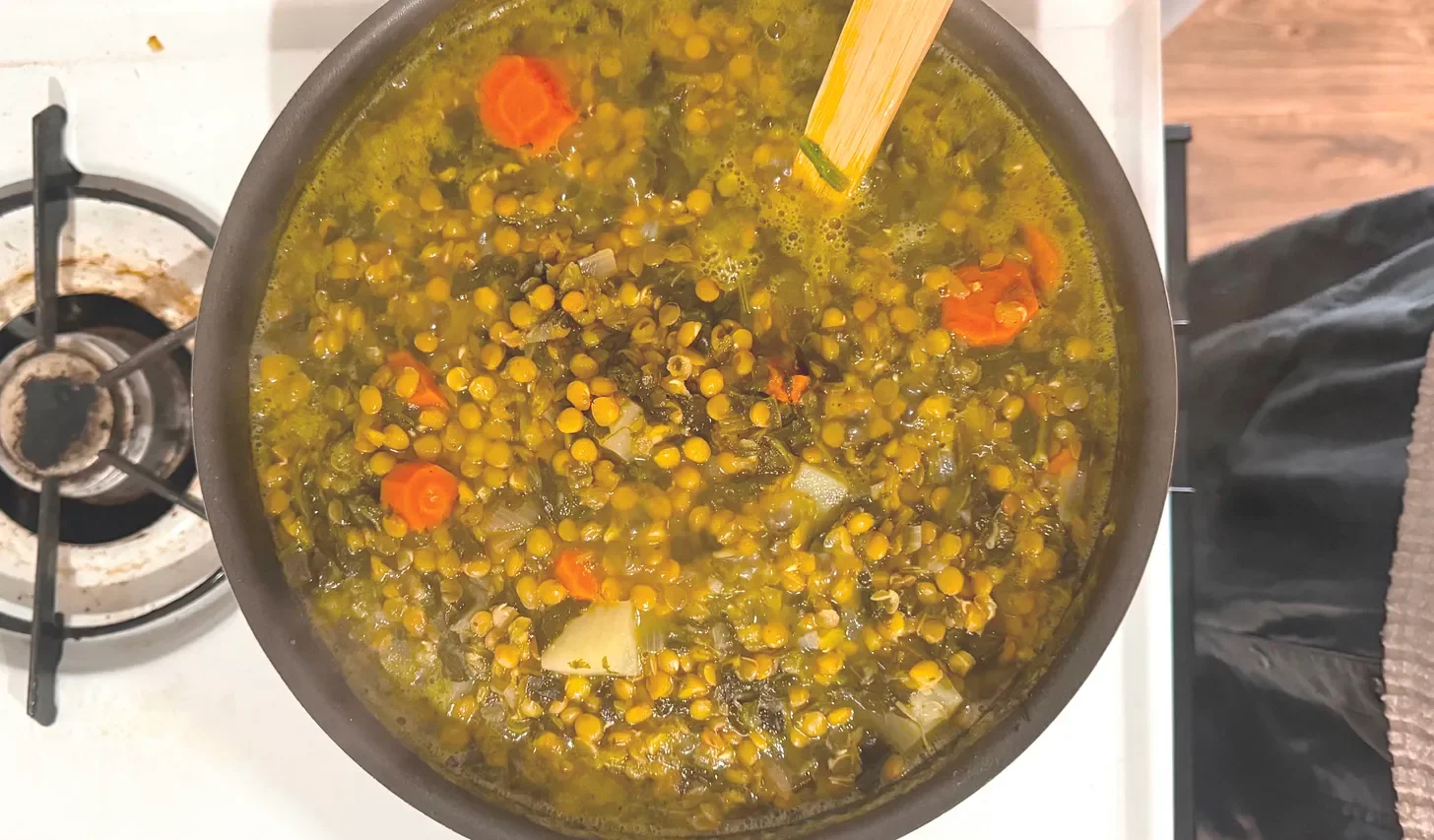
Lemony Spinach and Lentil Soup
Instructions:
Sauté onions and garlic
Throw everything else in the pot and simmer until the lentils, carrots, and potatoes are tender (about 45 minutes)
The Intangible Good
To try and answer the question, why not? I can only share a few observations.
Committing to this family brought intentionality to my weeks. It gave me an excuse to do something embodied—to take what had been grown, steward it, and create something nourishing. It gave me a place to practice sacrifice in small ways and to confront my ego, which turned out to be more invested than I expected. I found myself worrying they might’ve hated the soup… it definitely needed more salt.
I got to witness my little parish linger with me: Mika vacuuming; Marina cleaning out the fridge; Sabine prepping vegetables; Viktoria reorganizing the closet; Father John finally sitting down for coffee. Small conversations and ordinary work. It moves me to see how willing people are to serve, and to hear my imperfect contributions have encouraged them in return. Our labor is shared, given and received, and through it our community is formed.
But really, what if they did hate the soup? Asking for help is hard to begin with and it can be even harder when the help isn’t very good (or needs more salt). I can’t say exactly what their experience was, but it’s helped me recognize an opportunity for refinement in my life: to admit that all I can offer is imperfect love, and to feel grateful they were willing to receive it. And so, I believe there is a quiet form of service and perhaps even sanctification in the receiving of imperfect love. I will continue to practice this.
Mary of Bethany
Six days before the Passover, Jesus therefore came to Bethany, where Lazarus was, whom Jesus had raised from the dead. So they gave a dinner for him there. Martha served, and Lazarus was one of those reclining with him at table. Mary therefore took a pound of expensive ointment made from pure nard, and anointed the feet of Jesus and wiped his feet with her hair. The house was filled with the fragrance of the perfume. But Judas Iscariot, one of his disciples (he who was about to betray him), said, “Why was this ointment not sold for three hundred denarii and given to the poor?” — John 12:1-6
I think Judas’s question is fair. It’s one an effective altruist might ask.
But Christ’s response here revealed something greater was happening, something Judas did not understand. What appeared visibly wasteful was deemed more valuable than its earthly cost.
Effective altruism has its place; it makes sense to give where your dollar can go the furthest, particularly if your only contributions in the world are monetary.
But now, something in me resists dismissing the wildly inefficient too quickly. I’m more wary that I may miss an opportunity to participate in something unseen—something formative, sanctifying, and fragrant enough to fill a whole house…
like soup!